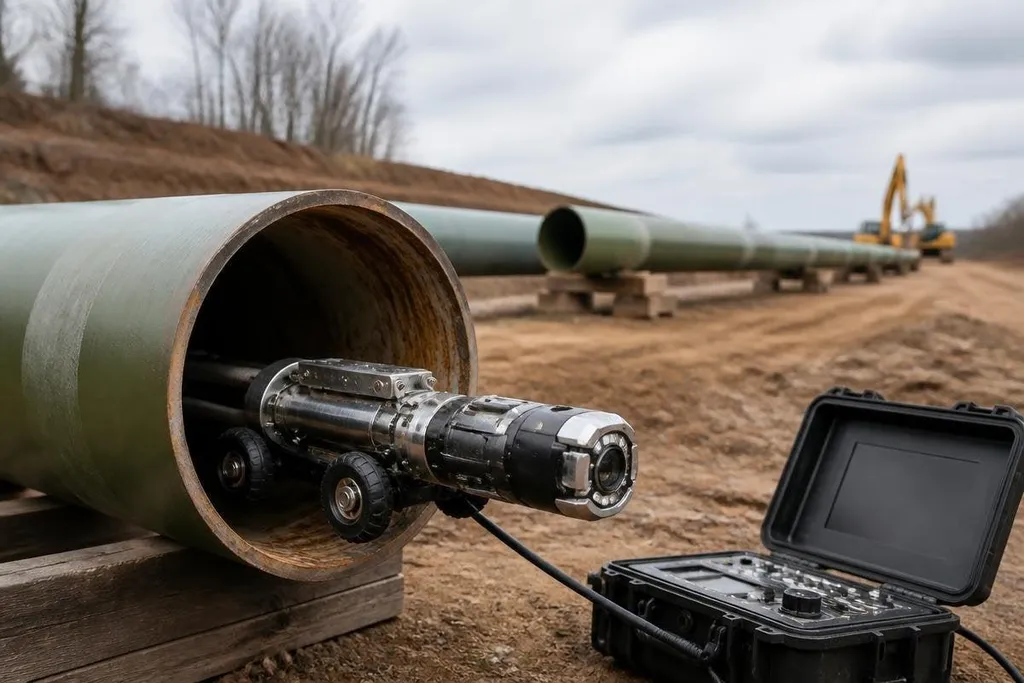
Pipeline robots have long collected images, sound, and other sensor readings inside pipes. AI changes the job by helping software sort that data, spot patterns, and guide the next inspection step without sending every reading to a person first.
- AI can sort large sets of inspection data by likely defect type.
- Computer vision can flag changes in wall shape, color, or surface condition.
- The hard test is still proof: can the system find defects without raising false alarms?
From raw data to inspection results
A robot moving through a pipe may record far more data than an operator can review at the same speed. AI software can scan those readings and mark sections that need human attention.
Computer vision handles camera images. It can look for changes such as cracks, corrosion, dents, or blocked areas when the training data contains clear examples of those conditions. The software does not understand a pipe like a person does; it compares new data with patterns it has learned.
That distinction matters. A mark on a pipe wall may come from damage, dirt, water, glare, or a camera problem. An AI system can flag the image, but an engineer may still need to decide what the mark means and what action should follow.
Better position estimates inside pipes
A robot also needs to know where each reading came from. GPS does not work inside most pipes, so the system must estimate position from wheel movement, cameras, LiDAR, sound, or other sensors.
AI can help compare new sensor readings with earlier ones and identify when the robot has passed a bend, joint, valve, or other known feature. That can make inspection records easier to match with the pipe map, but the estimate can drift when wheels slip or sensors lose a clear view.
The result is useful only if the location is reliable. A defect report that says “somewhere in this section” may not give a maintenance crew enough information to find it without another inspection.
How operators fit into the system
AI does not remove the need for operators. It changes where their time goes.
Instead of viewing every frame in order, an operator can review flagged sections, check uncertain results, and approve a report before it reaches a maintenance team.
That workflow creates a new failure point: the software may rank an ordinary image too low, or it may flag too many ordinary images. A high number of alerts can slow the review process until the human benefit disappears.
A model that spots corrosion in one pipe grade may miss it in another, so pipeline buyers need the pipe material, sensor, test date, and measured result. Robot24 can put those details beside the robot and its AI claim before the next section looks at training data.
Training data sets the limits
AI learns from examples. If its training data contains clean images from one pipe material, camera, or lighting condition, performance may change in a different pipe.
The same issue applies to rare defects. A system may have many examples of corrosion and few examples of a small crack near a joint. That gap can affect which findings it flags and which ones it misses.
Training also needs clear labels. Someone must mark what each image shows and, where possible, record the defect size, location, and later inspection result. Poor labels give the software a poor target.
I’d treat an AI inspection claim as unproven until the maker shows results from the pipe types and defect sizes you care about.
A practical check before a purchase
Use these points when a supplier presents an AI pipeline robot:
- Ask which defects the system can identify, and request the tested size range for each one.
- Check the pipe materials, diameters, bends, flow conditions, and sensor types used in testing.
- Request the false-alarm rate and the missed-defect rate, with the test method beside each figure.
- Find out who reviews flagged images and how the system records that decision.
- Confirm that every finding links to a usable pipe location, not only a video timestamp.
- Ask how the software handles new pipe conditions that were absent from its training data.
Those answers tell you how much work the AI removes and how much it shifts to review, mapping, and data checks. They also show where a pilot should start: with a known pipe section containing inspection results that people have already verified.
The next useful proof is a side-by-side test on the same pipe section, using the robot’s normal sensors and a human-reviewed inspection record. Until that comparison exists, AI may sort pipeline data faster, but the maintenance decision still belongs to the person who can verify the defect.