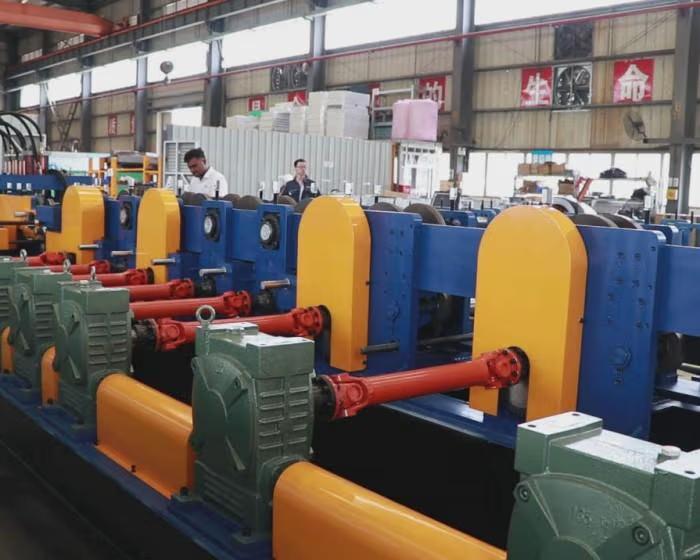
As industries around the world continue to invest in infrastructure, commercial development, and modern construction projects, the demand for efficient steel manufacturing solutions is increasing rapidly. Manufacturers are under pressure to produce high-quality steel components while maintaining productivity, cost efficiency, and consistent product standards. These requirements have contributed significantly to the expansion of the global roll forming industry.
Roll forming technology has become a cornerstone of modern steel production due to its ability to manufacture precise steel profiles efficiently and in large volumes. Advanced equipment such as a cold formed steel machine enables manufacturers to meet growing international demand while supporting innovation across multiple industries. As a result, the roll forming sector continues to experience strong growth worldwide.
The Rising Demand for Roll Forming Technology
Global construction and industrial development have created a growing need for steel components that offer durability, precision, and cost-effective production. Countries investing in commercial buildings, transportation networks, industrial facilities, and residential projects require reliable manufacturing methods capable of producing large quantities of structural steel products.
Roll forming has emerged as a preferred solution because it combines efficiency with consistent product quality. Manufacturers can produce a wide variety of steel profiles while optimizing material utilization and maintaining competitive production costs.
As urbanization and infrastructure development continue to expand globally, demand for roll forming technology is expected to remain strong.
Factors Driving Industry Growth
Expanding Construction Activities
The construction industry remains one of the largest consumers of roll formed steel products. Commercial buildings, warehouses, industrial facilities, and residential developments all require structural steel components produced through efficient manufacturing processes.
Growing construction activity continues to create new opportunities for roll forming manufacturers worldwide.
Increased Demand for Steel Framing
Steel framing systems have become increasingly popular due to their strength, durability, and efficiency. The growing adoption of steel-framed buildings has contributed significantly to the demand for roll formed profiles.
This trend is expected to support continued industry expansion in the coming years.
Advances in Manufacturing Technology
Modern automation, digital monitoring systems, and precision engineering have improved the capabilities of roll forming equipment. These innovations allow manufacturers to achieve higher productivity and greater product consistency.
Technological advancements continue to make an attractive investment for manufacturers seeking long-term growth.
Focus on Sustainable Production
Manufacturers are increasingly adopting efficient production methods that reduce waste and improve resource utilization. Roll forming supports sustainability goals through optimized material usage and reduced production scrap.
This environmental advantage further strengthens the industry's growth potential.
Global Industrial Development
Industrial expansion across emerging and developed markets has increased demand for steel components used in manufacturing facilities, logistics centers, and infrastructure projects.
As industrial investment continues to rise, roll forming technology remains an important part of global steel production.
Applications Supporting Industry Expansion
Roll formed products are widely used in:
- Commercial buildings
- Industrial facilities
- Warehouses and logistics centers
- Residential housing projects
- Agricultural structures
- Roofing systems
- Wall cladding applications
- Infrastructure developments
These diverse applications help drive demand for roll forming technology across multiple sectors and geographic regions.
Choosing the Right Manufacturing Equipment
Manufacturers looking to capitalize on industry growth should carefully evaluate factors such as machine efficiency, automation capabilities, production flexibility, durability, and long-term reliability.
Businesses investing in a cold formed steel machine can improve their ability to produce high-quality structural profiles efficiently. Likewise, a curving machine provides additional production versatility by enabling the manufacture of specialized curved steel components for unique architectural and industrial applications.
Modern equipment helps manufacturers remain competitive while meeting evolving market demands.
Conclusion
The global roll forming industry continues to grow as demand for efficient steel manufacturing solutions increases across construction, infrastructure, and industrial sectors. Factors such as expanding construction activity, rising demand for steel framing, technological innovation, and sustainable manufacturing practices are driving this growth.
Whether utilizing a cold formed steel machine for structural steel production or a curving machine for specialized applications, manufacturers are benefiting from the efficiency, precision, and flexibility offered by modern roll forming technology. As global development continues to accelerate, the roll forming industry is expected to play an increasingly important role in shaping the future of steel manufacturing.